The AI Insider

The Masthead

About
The AI Insider

A weekly paper for the person stuck in the middle — aware AI matters, curious about it, and out of patience with sources that make it harder, not easier.

No. 01 Why

Everyone kept hitting the same wall: wanting to know what was actually happening in AI, and finding that every source made it harder, not easier.

Twitter offered hype threads written by people chasing virality, half of which turned out wrong or wildly exaggerated by the next morning. Research blogs offered the opposite problem — dense, jargon-thick write-ups that assumed a PhD's worth of context before the headline even finished. Twenty minutes could go by just trying to figure out if a piece of "news" was significant, and most days ended with no more clarity than they began with.

It wasn't a rare complaint; it was the norm. Students, working professionals, people running something of their own — almost everyone shared the same disconnect from AI: aware it mattered, curious about it, but with nowhere to go that respected both their intelligence and their time. Nobody was building for the person stuck in the middle. So something got built for exactly that gap.

No. 02 What

The AI Insider is a newspaper about artificial intelligence — a real paper, with a masthead, a front page and a voice, not a newsletter dressed up to look important.

Six desks cover the AI world from every angle: the big news that actually matters, the builder's toolkit for people making things with AI, the money and jobs side of the industry, the wildest breakthroughs that still sound like science fiction, the drama and rivalry between the major AI labs, and the small, everyday, practical stuff that shows up in a normal day.

Alongside the news sit smaller, sharper features built purely to make the paper worth returning to: a prompt worth actually using, a live pulse on the industry's mood, and a bit of daily fun to crack open. None of it is filler; each piece earns its place by either informing or entertaining, ideally both at once. Built for the newcomer and the obsessive alike, so both walk away having gotten something real.

No. 03 How

Every edition follows one rule: three new stories per desk, and one older story pulled back from the archive because it's still worth revisiting.

That's it — no infinite scroll, no forty tabs open trying to piece together what happened, no algorithm deciding what you see based on what keeps you scrolling longest. You open the edition, you read it in the time it takes your coffee to go from too hot to just right, and you're caught up. If you want more, the archive is there. If you don't, you've lost nothing by only reading a handful of stories.

That discipline is deliberate. We didn't want to build something that demanded your attention all day; we wanted to build something that respected it, gave you exactly what you needed once, and then let you get on with your life. Every section, every feature, every design choice was measured against one question: does this help someone understand AI faster, or does it just add more noise to a space that already has too much of it? Anything that didn't pass got cut.

The result reads less like a feed and more like a habit — the same way people used to open a newspaper once a day, not because they had to, but because it was reliably worth the five minutes.


The Desk

Two people. One standard for what runs.

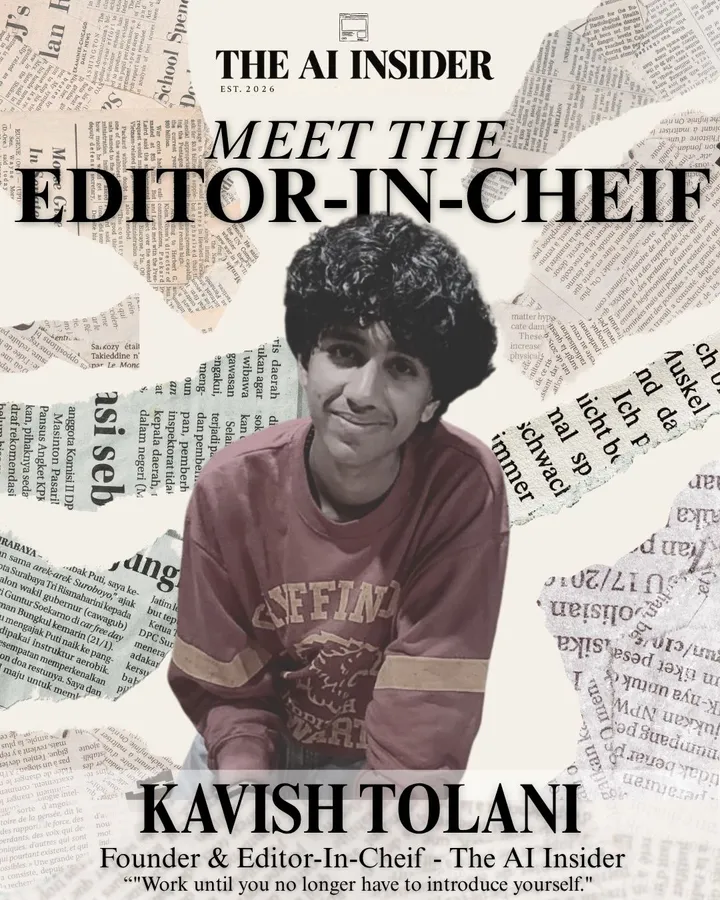
Kavish Tolani, Founder and Editor-in-Chief of The AI Insider

From the Editor-in-Chief

Kavish Tolani

Founder and Editor-in-Chief

“Work until you no longer have to introduce yourself.”

My most valuable possession is not a single thing. It's a graveyard of forty-something open tabs across two laptops and a phone, most of them a week old, none of them read. A thread about a new model release. A research paper I swore I'd get to "tonight," three tonights ago. A screenshot someone sent at 1 a.m. captioned "bro this changes everything," which, by the time I actually opened it, already hadn't. Each tab was a tiny promise I made to myself — to understand something, to keep up, to not be the person nodding along in a conversation while quietly Googling under the table. And each one just sat there. Blinking. Unkept.

I didn't notice how much this was costing me until someone asked me, casually, what I actually thought about everything happening in AI — and I froze. I had consumed hours of it. I could quote headlines. I could not, in one honest sentence, tell you what actually mattered. I wasn't informed. I was just exhausted, and open in forty places at once, and somehow still behind.

What scared me more was realizing this wasn't just me. It was my friends nodding along in group chats, quietly lost. It was people twice my age asking what "the AI thing" actually does, half-embarrassed to ask twice. It was people building real businesses, secretly convinced everyone else had already figured this out and they were the only one behind. We were all standing in the same fog, each of us assuming everyone else could see further than we could. Nobody wanted to be the one to admit it.

So I did the one thing that felt like it would fix something instead of adding to it: I closed the tabs, and I built the thing I actually needed instead. Not another thread. Not another newsletter that just meant more to skim later. A paper — a front page, real sections, a shape, an actual ending you could reach. Something you finish, the way you finish a newspaper, instead of something you scroll until guilt makes you close the app.

It did not feel glamorous. It felt like rewriting the same headline nine times at midnight because it still sounded fake. It felt like deleting an entire section I'd spent a week on because it was accurate but boring, and boring is its own kind of lie. It felt like a lot of instant coffee, a truly unforgivable number of browser crashes, and one very confused group of friends who still think I "just make a newsletter or something."

I did not become Editor-in-Chief because I wanted it on a business card — mostly because I don't have a business card, and if I did, I'd probably lose it in the same pile as everything else. I became Editor-in-Chief because somebody had to actually sit in the mess long enough to make sense of it: to decide, every single day, what deserved five minutes of your attention and what didn't, and to be wrong sometimes and say so, out loud, in public, without pretending otherwise. Nobody hands you that job. You just get tired of waiting for someone else to take it, and one day you notice you already have.

My tabs are fewer now. Not because I stopped caring — I care more than I ever have — but because I finally built somewhere to put it all down instead of carrying it around half-read forever. I didn't come here to be the smartest person talking about AI. I came here to be the one who finally sat down, did the work, and made sure you never had to feel as lost as I did. If even one tab closes in your life because of this paper, I'll consider it the best thing I've ever built.

Thank you.
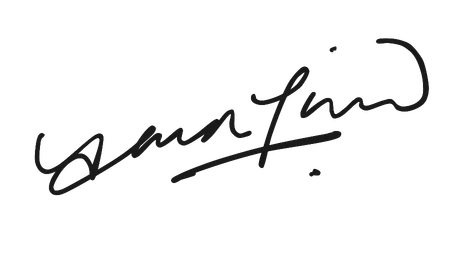
Kavish Tolani's signature
Kavish Tolani Founder and Editor-in-Chief
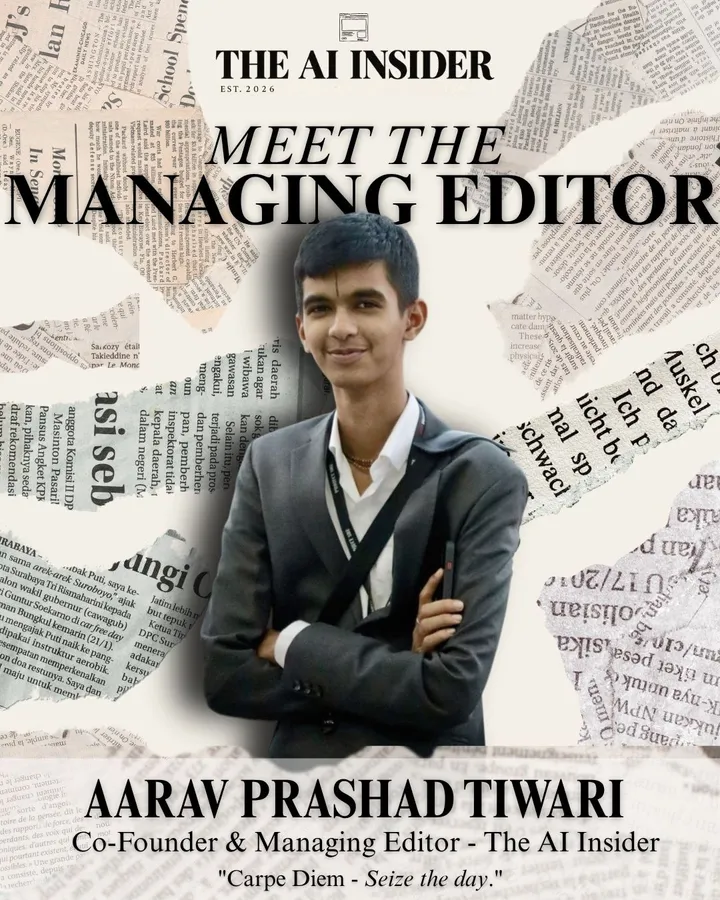
Aarav Prashad Tiwari, Managing Editor and Co-Founder of The AI Insider

From the Managing Editor

Aarav Prashad Tiwari

Managing Editor and Co-Founder

“Carpe diem — seize the day.”

"AI will be able to do anything digital, anything that does not require shaping of atoms by hand, probably by the end of next year." — Elon Musk. I read it, sat with it for a second, and then did what most people do: closed the article, went back to whatever I was doing, and let the sentence disappear into everything else I was ignoring.

We didn't start The AI Insider because we understood AI better than everyone else. We started it because we didn't, and pretending otherwise felt worse than admitting it. That's the part that scares me. Not that AI is moving fast — everyone already knows that. What scares me is how many of us know it and still don't actually understand it. We nod along in conversations. We've seen the headlines. We couldn't explain, in one honest sentence, what's actually happening or why it matters to our own lives.

This isn't a small gap. It's happening to a grandfather who doesn't know what "the AI thing" even means. A teacher rethinking how to teach. A doctor rethinking how to diagnose. A friend building a business, quietly convinced everyone else already figured this out. Different ages, different rooms, same fog. Nobody wants to be the one who admits they're behind.

So this isn't really a newsletter. It's the thing I wish existed before I had to piece this together myself — sorted, simple, and actually finishable. Not another feed to scroll and abandon halfway. Something with a shape. Something you read start to finish, the way you finish a newspaper instead of guilt-closing a tab.

I'm not doing this because I have all the answers. I'm doing this because someone has to sit in the noise long enough to make sense of it for the rest of us — and be wrong sometimes, and say so. I want The AI Insider to be the place where you stop pretending. Where you don't have to nod along anymore, because you actually know. Where a sixteen-year-old and a sixty-year-old grandparent can read the same page and both walk away understanding something real.

If this helps even one person stop nodding along and actually understand what's happening, that's enough for me.

With gratitude.

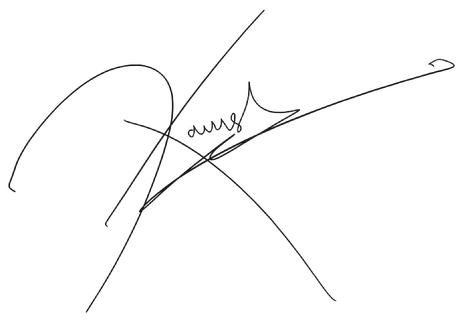
Aarav Prashad Tiwari's signature
Aarav Prashad Tiwari Managing Editor and Co-Founder

Now Hiring · Founding Team

Help build the first editions

We're assembling a small founding team across editorial, art, marketing, operations, outreach and tech. No CV required, no task attached — just a few honest questions and your best link.

Apply to the founding team →

Takes about 15 minutes · opens the application portal